
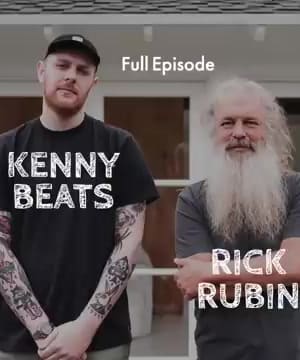
Kenny Beats on the Regional Sounds of Hip-Hop | Broken Record (Hosted by Rick Rubin)

Topics covered
Popular Clips




Episode Highlights
City Sounds
explores how regional sounds shape hip-hop, emphasizing the influence of local culture and environment on music production. He notes that instruments and tempos vary by city, with horns favored in New Orleans and Atlanta, while pianos and strings are more common in the Midwest 1. Local elements like crime and drug culture also impact the music's tempo and themes, as seen in the Bay Area's hyphy movement and Detroit's street-level narratives 2. Kenny highlights Miami's fast-paced bass music, attributing its unique sound to the city's vibrant street life and electronic influences 3.
The cities that believe in the music and in the hip hop and see it as a business are the ones where the sound finally takes precedent.
---
This understanding allows producers to create beats that resonate with local audiences, reflecting the authentic experiences of each region.
Sound Evolution
The evolution of hip-hop is deeply tied to regional trends and historical contexts. explains that the feel, bounce, and tempo of music have led to distinct styles across the country 4. He notes that producers often draw on past influences, like crunk music and Three 6 Mafia, to create contemporary sounds that resonate with audiences 5. Kenny emphasizes the importance of understanding local culture and history, using his experiences as a DJ to inform his production work 6.
It's like there's kids who are so influenced by crunk music and by Three 6 Mafia and by all these things that now it's like the drums and the swing of the drums and the sounds of the drums are the biggest thing in so many records.
---
This approach allows him to craft music that respects tradition while pushing boundaries.
Local Slang
Understanding local slang is crucial for producers and artists working in different regions. shares his experiences with regional slang, highlighting its importance in connecting with artists and audiences 7. He stresses the need to ask questions and learn from locals to avoid misunderstandings, as slang can drastically change the meaning of lyrics 8. Kenny recounts how his initial misinterpretations of slang terms were corrected through collaboration with artists, enhancing his ability to produce authentic music.
If you're not from that place, unless you're around those people all the time, like, don't even pretend you understand what it means.
---
This openness to learning ensures that his work remains genuine and resonates with diverse audiences.
Related Episodes


Kenny Beats + Rick Rubin, Part 2 | Broken Record
Answers 383 questions
RZA | Broken Record (Hosted by Rick Rubin)
Answers 383 questions
John Legend | Broken Record (Hosted by Rick Rubin)
Answers 383 questions

André 3000 | Broken Record (Hosted by Rick Rubin)
Answers 383 questions
BROCKHAMPTON'S Kevin Abstract | Broken Record (Hosted by Rick Rubin)
Answers 383 questions
Pharrell Williams | Broken Record (Hosted by Rick Rubin)
Answers 383 questions
Richard Russell | Broken Record (Hosted by Rick Rubin)
Answers 383 questions
Lenny Kravitz | Broken Record (Hosted by Rick Rubin)
Answers 383 questions

Don Was | Broken Record (Hosted by Rick Rubin)
Answers 383 questions

Missy Elliott | Broken Record (Hosted by Rick Rubin)
Answers 383 questionsMoby Reprised | Broken Record (Hosted by Rick Rubin)
Answers 383 questions
James Blake | Broken Record (Hosted by Rick Rubin)
Answers 383 questionsMalcolm Gladwell Interviews Rick Rubin | Broken Record
Answers 383 questions
Legendary Music Journalist Lisa Robinson | Broken Record (Hosted by Rick Rubin)
Answers 383 questions
Flea of the Red Hot Chili Peppers | Broken Record (Hosted by Rick Rubin)
Answers 383 questions