
Rick Rubin: Protocols to Access Creative Energy and Process

Topics covered
Popular Clips
Questions from this episode
- Asked by 2,136 people
- Asked by 1,171 people
- Asked by 790 people
- Asked by 779 people
- Asked by 615 people
- Asked by 366 people
- Asked by 254 people
- Asked by 236 people
- Asked by 223 people
- Asked by 172 people
- Asked by 168 people
- Asked by 98 people
- Asked by 98 people
- Asked by 78 people
- Asked by 67 people
Episode Highlights
Creative Blocks
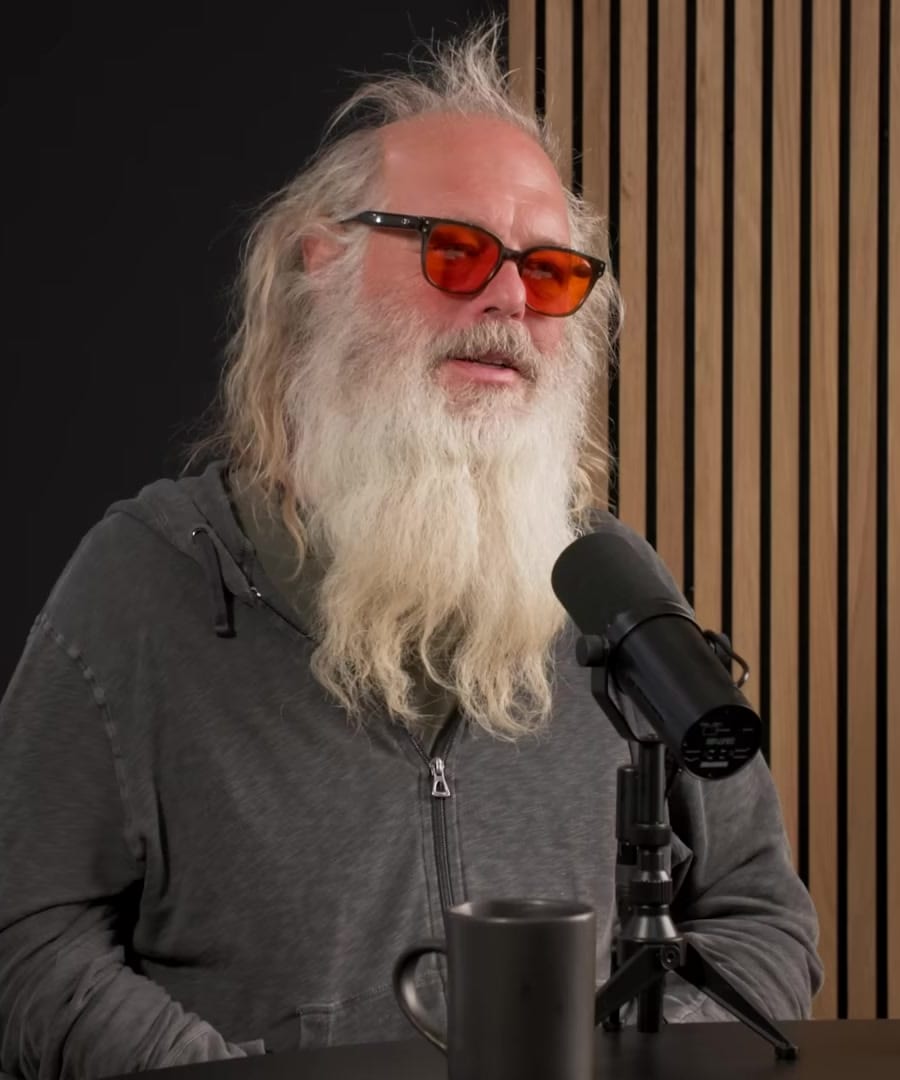
Rick Rubin shares his approach to overcoming creative blocks by reframing them as opportunities for personal expression. He emphasizes the importance of creating without the pressure of external judgment, likening creative work to a personal diary entry that is immune to criticism. Rubin suggests that the fear of judgment often creates these blocks, and by focusing on honesty and self-expression, one can bypass these barriers 1. He also notes that ideas have their own timeline and should not be forced, as the universe often dictates when they come to fruition 2.
The block is usually something like, it's either a personal, I'm not good enough. It can be a confidence issue.
---
This perspective encourages a more fluid and less pressured creative process.
Creative Organization
Rubin discusses the balance between chaos and organization in the creative process. He explains that while creativity often begins in a free, playful state, it eventually requires structure to bring ideas to fruition. This balance allows for experimentation without losing focus, and Rubin stresses the importance of not letting initial chaos deter the creative journey 3. He also highlights the significance of solving creative problems in unique ways, such as his innovative approach to podcast advertisements, which turned a challenge into a feature 4.
It's good because it's chaotic and it just happens to be sometimes chaotic.
---
This approach underscores the necessity of embracing both freedom and structure.
Success Stories
Rubin's career is marked by significant milestones and unexpected achievements, driven by his unique approach to creativity. He reflects on his collaborations with artists like Johnny Cash, emphasizing the importance of authenticity and the human element in artistic success 5. Rubin's ability to resist peer pressure and maintain his individuality, even in environments where substances are prevalent, is another testament to his strong sense of self 6.
He was Johnny Cash because of the human being underneath and anything that guy would have done, we would be interested in.
---
These stories highlight the power of staying true to oneself in the creative process.
Related Episodes


Rick Rubin & Malcolm Gladwell on “The Creative Act” | Broken Record
Answers 383 questionsMalcolm Gladwell Interviews Rick Rubin | Broken Record
Answers 383 questions
Brian Eno: The Innovator | Broken Record (Hosted by Rick Rubin)
Answers 383 questions
RZA | Broken Record (Hosted by Rick Rubin)
Answers 383 questions
BROCKHAMPTON'S Kevin Abstract | Broken Record (Hosted by Rick Rubin)
Answers 383 questions
Richard Russell | Broken Record (Hosted by Rick Rubin)
Answers 383 questions
Todd Rundgren | Broken Record (Hosted by Rick Rubin)
Answers 383 questions
Missy Elliott | Broken Record (Hosted by Rick Rubin)
Answers 383 questions
Pharrell Williams | Broken Record (Hosted by Rick Rubin)
Answers 383 questions
Neil Young | Broken Record (Hosted by Rick Rubin)
Answers 383 questions

André 3000 | Broken Record (Hosted by Rick Rubin)
Answers 383 questions
Michael Stipe | Broken Record (Hosted by Rick Rubin)
Answers 383 questions
Jack White ft. Special Guest Neil Young | Broken Record (Hosted by Rick Rubin)
Answers 383 questionsMoby Reprised | Broken Record (Hosted by Rick Rubin)
Answers 383 questions

