EU AI Act Passes in Parliament

Topics covered
Popular Clips

Episode Highlights
High-Risk Apps
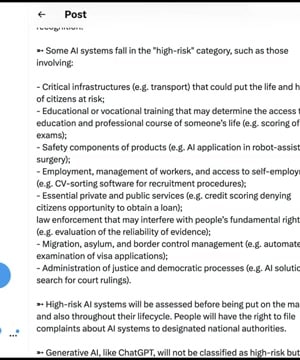
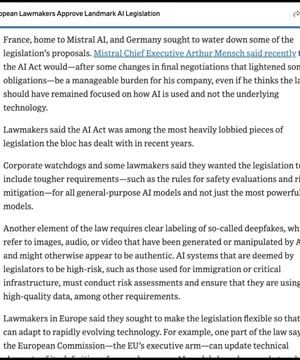
The EU AI Act categorizes certain AI applications as high-risk due to their potential impact on individuals' lives. These include systems used in recruitment, credit scoring, and law enforcement, where decisions can significantly affect careers, livelihoods, and legal treatment 1. High-risk systems must undergo assessments before market release and throughout their lifecycle, with procedures for filing complaints about their use 1. notes that the act creates a loophole allowing developers to exempt themselves from obligations, sparking concerns about innovation stifling in Europe 2.
The passage of the EU AI act once again creates a rift between the USA and the EU, which the USA can exploit with legal protection for AI development.
---
The act's enforcement will apply to any company operating in Europe, with noncompliance fines reaching up to 7% of worldwide annual turnover 2.
Generative AI
Generative AI tools, while not classified as high-risk, face specific regulations under the EU AI Act. These tools must adhere to transparency requirements, such as disclosing AI-generated content and preventing illegal content generation 1. explains that powerful AI models with systematic risks must undergo safety evaluations and report serious incidents to regulators 1.
Makers of the most powerful AI models deemed to have what the EU calls a systematic risk, will be required to put those models through state of the art safety evaluations.
---
The legislative process faced pushback from industry groups and some European governments, who argued for focusing on risky uses rather than blanket rules for general-purpose AI 1.