Polly Fordyce — Microfluidic Platforms and Machine Learning

Topics covered
Popular Clips


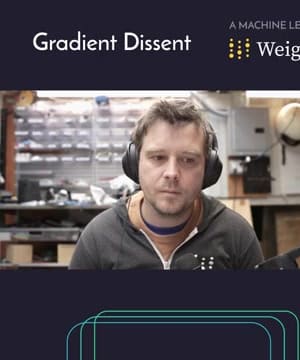


Episode Highlights
Microfluidic Devices
introduces the concept of microfluidic devices, likening them to integrated circuits for fluid computations in biology. These devices revolutionize biological experiments by allowing high-throughput fluidic computations in a compact format, reducing the need for large, expensive equipment. Polly explains, "We can generate data at a scale that allows us to quantitatively test predictions from our colleagues in ML" 1. This innovation not only cuts costs but also enhances the interface between biology and machine learning, enabling more precise data collection and analysis 2.
Enzyme Analysis
Microfluidics play a crucial role in enzyme analysis, offering insights into enzyme activity and potential applications. describes how these devices allow for the creation of enzyme variants in tiny chambers, enabling researchers to assess mutations' effects on enzyme function. She notes, "This might help us classify variants in the human population for whether or not they're likely to compromise function and cause disease" 3. This technology not only aids in understanding enzyme behavior but also holds promise for environmental and medical applications 4.
Fluidic Computation
Fluidic computation, as explained by , offers a scalable and efficient alternative to traditional biological experiments. By using microfluidic devices, researchers can perform thousands of reactions simultaneously, significantly reducing time and resource consumption. Polly emphasizes, "These devices make it possible to use fewer reagents. So everything is low cost" 1. This approach not only accelerates data generation but also facilitates collaboration with machine learning experts to refine predictive models and explore new scientific frontiers 1.
Related Episodes


Daphne Koller — Digital Biology and the Next Epoch of Science
Answers 383 questions
Zack Chase Lipton — The Medical Machine Learning Landscape
Answers 383 questions
Sean and Greg — Biology and ML for Drug Discovery
Answers 383 questions
Boris Dayma — The Story Behind DALL·E mini, the Viral Phenomenon
Answers 383 questions
Matthew Davis — Bringing Genetic Insights to Everyone
Answers 383 questions
Piero Molino — The Secret Behind Building Successful Open Source Projects
Answers 383 questions
Chris Padwick — Smart Machines for More Sustainable Farming
Answers 383 questions
Vicki Boykis — Machine Learning Across Industries
Answers 383 questions
Jonathan Frankle of MosiacML— Neural Network Pruning and Training
Answers 383 questions
Chip Huyen of Claypot AI— ML Research and Production Pipelines
Answers 383 questions
Accelerating drug discovery with AI: Insights from Isomorphic Labs
Answers 383 questions
Phil Brown — How IPUs are Advancing Machine Intelligence
Answers 383 questions
Will Falcon — Making Lightning the Apple of ML
Answers 383 questions
Johannes Otterbach — Unlocking ML for Traditional Companies
Answers 383 questions