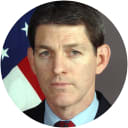
Whistleblower at the CIA: An Interview with Melvin Goodman

Topics covered
Popular Clips
Episode Highlights
Independence
The independence of CIA analysts is crucial for unbiased intelligence, yet it faces significant challenges. argues that fusion centers, which integrate analysts and operatives, compromise this independence by favoring operational culture over analytical rigor. He believes analysts should remain compartmentalized to avoid manipulation by operatives, whose political effectiveness often overshadows analytical integrity 1. states, "The idea of fusing them, I think, is going to give the upper hand to the operational culture because they're more effective politically than intelligence analysts" 2. This separation is essential to maintain the objectivity and depth of intelligence analysis.
Politicization
The politicization of intelligence within the CIA has historically skewed analysis to fit political agendas. highlights how directors like William Casey and Robert Gates influenced intelligence to align with political narratives, such as linking the Soviet Union to terrorism 3. This manipulation often resulted in phony intelligence, undermining the agency's credibility. recalls, "There was so much phony intelligence on Central America, on Afghanistan, on all aspects of Soviet policy" 4. Such practices have long-term implications, as they erode trust in intelligence and hinder objective analysis.
Leadership
Leadership under William Casey and Robert Gates significantly impacted CIA operations and morale. describes Casey's tenure as overly political, with his cabinet-level position blurring the lines between intelligence and policy 5. Gates, known for his ambition, prioritized delivering intelligence that matched Casey's expectations, often at the expense of integrity. notes, "He had decided to give Casey what Casey wanted in terms of intelligence" 4. This environment fostered a culture where political agendas overshadowed factual analysis, affecting the agency's overall effectiveness.
Related Episodes

The CIA and the End of the Cold War
Answers 383 questions

Spy Sites of DC: An Interview with Keith Melton and Bob Wallace
Answers 383 questions

Speaking Truth to Power: An Interview with Ned Price
Answers 383 questions
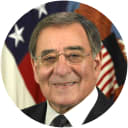
CIA Director, Defense Secretary, Gentleman with Leon Panetta
Answers 383 questions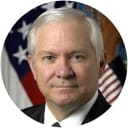
“The 75th Anniversary of the CIA” – with former Director Robert Gates
Answers 383 questions
“An Imperial History of the CIA” – with Hugh Wilford
Answers 383 questions

Dick Holm: the Perils and Rewards of a Life in the CIA, Part 1
Answers 383 questions
Cuba Libre: An Interview with Intelligence Legend Felix Rodriguez (Part II)
Answers 383 questionsU.S. Intelligence in Decline?
Answers 383 questions
From the Secret Files of the CIA
Answers 383 questions
CIA’s Man in Havana: An Interview with Canadian Diplomat John Graham
Answers 383 questions
“The Greatest Analyst We Ever Had” – CIA Spy Chief Marty Petersen
Answers 383 questions