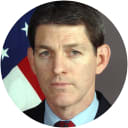
“The Third Option” – US Covert Action with Loch Johnson (Part 2 of 2)

Topics covered
Popular Clips

Questions from this episode
- Asked by 4 people
Episode Highlights
Prediction
Predicting specific threats in intelligence work is inherently challenging. compares it to a football coach warning about a dangerous player without knowing the exact play they'll make. He emphasizes that while precise predictions are impossible, intelligence can still provide valuable insights to guide decision-making 1. Johnson shares an example of a 1995 CIA report predicting aerial terrorism, which was ignored due to cost concerns, highlighting the gap between intelligence and policy action 2.
Providence has not given humankind the capacity to pierce the fog of the future.
---
Despite these challenges, intelligence remains crucial in preparing for potential threats.
Policy
The relationship between intelligence assessments and policy decisions is complex. Johnson argues that intelligence failures often reflect policy failures, as seen in the lack of response to warnings about potential threats like 9/11 2. He explains that intelligence agencies provide daily insights to policymakers, yet the effectiveness of these insights depends on their implementation 3.
It's asking too much...to have specific times and days. But you can do a lot to prepare people to make the right decision at the right time.
---
The challenge lies in translating intelligence into actionable policy, requiring both foresight and willingness to act.
Related Episodes


“The Third Option” – US Covert Action with Loch Johnson (Part 1 of 2)
Answers 383 questions

Our Man in the Middle East (Part 3)
Answers 383 questionsU.S. Intelligence in Decline?
Answers 383 questions
“The 75th Anniversary of the CIA” – with former Director Robert Gates
Answers 383 questions
The Triple Agent: The al-Qaeda Mole Who Infiltrated the CIA
Answers 383 questions
“The Recruiter: Part 2 of 2” – Modern Spycraft with Doug London (Part 2)
Answers 383 questions

CIA vs DOD: A Conversation with David Oakley
Answers 383 questions
The CIA and the End of the Cold War
Answers 383 questions
Intelligence and Conspiracy Theories I
Answers 383 questions

US Air Force – Office of Special Investigations: Part 2
Answers 383 questionsIntelligence and the Presidential Elections II
Answers 383 questions
Counterterrorism, Intelligence, and the Iraq War
Answers 383 questions
“An Imperial History of the CIA” – with Hugh Wilford
Answers 383 questions
“The Counterintelligence Chief” – with FBI Assistant Director Alan Kohler
Answers 383 questions