
Ray Kurzweil Wants To Put Nanobots In Our Bloodstream

Topics covered
Popular Clips


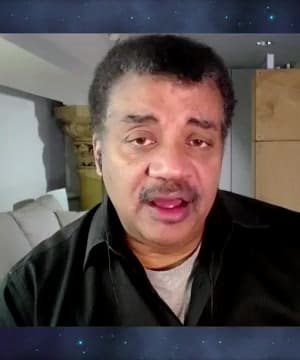

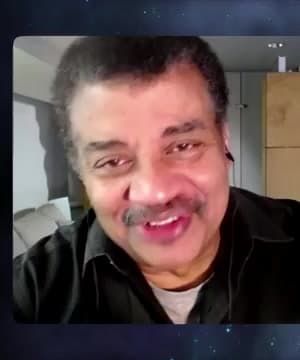


Episode Highlights
Brain-Cloud
The concept of connecting human brains to the cloud is a revolutionary idea that explores with . Kurzweil envisions nanobots entering the neocortex to amplify brain functions by linking them to the cloud, similar to how smartphones enhance our capabilities today 1. He argues that while our understanding of the brain is limited, the potential to expand our cognitive abilities is immense 2.
It's much better to actually have it in your brain. You have it instantly trying to reach your phone. Typing on it is awkward. This will be much better.
---
Kurzweil believes that this integration will allow us to overcome the limitations of our natural brain capacity, potentially multiplying our cognitive abilities by millions 1.
Nanotech
Nanotechnology is poised to transform medicine and human enhancement, with nanobots playing a crucial role. Kurzweil discusses how these tiny machines could replace or repair failing organs, offering a more reliable solution than current medical practices 2. He envisions a future where nanobots can seamlessly integrate with our biological systems, enhancing our natural capabilities 1.
We'll send nanobots through the bloodstream.
---
This advancement could lead to unprecedented improvements in human health and longevity, making once-impossible feats achievable.
Exponential Growth
The exponential growth of computational power is reshaping technological capabilities, as highlighted by Kurzweil. He explains that the price-performance ratio of computation has improved dramatically, enabling advancements across various sectors 3. This trend, often associated with Moore's Law, continues to push the boundaries of what is possible, despite predictions of its end 4.
People used to call this Moore's law, but, I mean, there's 80 dots on this. Only ten of them are intel. So it's really not Moore's law.
---
Kurzweil believes that this ongoing progress will facilitate the integration of technology with human biology, further enhancing our capabilities.
Related Episodes

Are We Approaching the Singularity?
Answers 383 questions
The Future of Quantum Computing with Michio Kaku, Neil deGrasse Tyson & More
Answers 383 questions
Scientists Discuss the Future of Biological Computing
Answers 383 questions
Can Robots Develop Human Senses?
Answers 383 questions
The Competition to Extend Human Lifespan with Neil deGrasse Tyson & Peter Diamandis
Answers 383 questions
Can We Bring The Dead Back To Life?
Answers 383 questions
Will AI Replace Us? With Neil deGrasse Tyson & Matt Ginsberg
Answers 383 questions

Neil & Anil Seth Discuss Consciousness in the Universe
Answers 383 questionsConfronting Neil With Our Burning Questions… Again!
Answers 383 questionsMedicine 3.0: Extending Human Lifespan with Neil deGrasse Tyson & Dr. Peter Attia
Answers 383 questions
Killer Bots! with Neil deGrasse Tyson and BattleBots’ Ray Billings
Answers 383 questions
StarTalk Podcast: Designer Babies & AI, with Neil deGrasse Tyson
Answers 383 questions
The Joy of Techno Science with Rayvon Fouché
Answers 383 questionsLiving in a Simulation with Neil deGrasse Tyson and Nick Bostrom – Cosmic Queries
Answers 383 questions