
The Long Arc to Scientific Understanding — Live from the Museum of Natural History

Topics covered
Popular Clips




Episode Highlights
Measurement Uncertainty
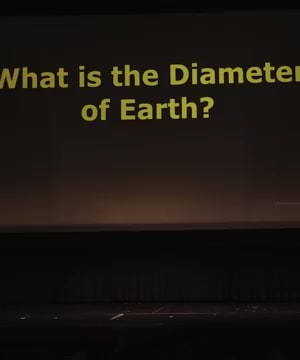
explores the inherent uncertainties in measurements, using everyday examples like height and celestial diameters. He explains that even something as simple as measuring height is fraught with variables, such as the width of measuring lines and the effect of gravity on our bodies throughout the day 1. This uncertainty extends to celestial measurements, where the diameter of the Earth or the Sun can vary based on the method and perspective used 2.
You say, I have an idea. I have a way to make a measurement, and I will report the measurement and compare it with other people's measurements.
---
These examples highlight the challenges scientists face in achieving precision and the importance of acknowledging these uncertainties.
Earth's Complexities
The complexities of measuring Earth's physical features are highlighted by , who explains the inaccuracies in determining Earth's orbit and shape. Earth's orbit, often described as an ellipse, is actually more complex due to the gravitational interactions with the Moon and the solar system's movement through the galaxy 3. Similarly, measuring Earth's diameter involves deciding whether to include mountains or ocean trenches, leading to different results 2.
Earth is practically a perfect sphere. You say, no, it's not. There's a mountain sitting in front of me. What do you mean? We're a perfect sphere.
---
These intricacies illustrate the challenges in conveying accurate scientific information.
Coastline Paradox
The coastline paradox exemplifies the difficulties in scientific measurement, as discusses the seemingly simple task of measuring a coastline. The length of a coastline can vary drastically depending on the measurement method, such as the size of the measuring unit or the tide level 4. This paradox underscores the broader theme of measurement uncertainty, as seen in the challenges of defining the Earth's diameter or the Sun's edge 2.
The question how long is the coastline of the United Kingdom? Has no answer.
---
Such examples emphasize the importance of understanding and accepting the limitations of scientific measurements.
Related Episodes


StarTalk Live with Neil deGrasse Tyson: Searching for Life in the Universe
Answers 383 questions
Scientists Discuss New Theories on The Origins of Life in the Universe
Answers 383 questions
Galaxies Beyond Our Horizon - Cosmic Queries with Neil deGrasse Tyson
Answers 383 questions
Astrophysicists Explore Space, Time, & The Insides of Atoms
Answers 383 questions
A Cosmic Crisis - Cosmic Queries
Answers 383 questions
Cosmic Queries: Space and Science Part 2 (Full Episode)
Answers 383 questionsAstrophysicists Explore The Latest in Exoplanet Discovery
Answers 383 questionsThe Race to Long Distance Entanglement – Cosmic Queries
Answers 383 questionsCosmic Queries – Cosmological Curiosities with Neil deGrasse Tyson
Answers 383 questions
Exploring the Cosmos in VR with Neil deGrasse Tyson & Mark Zuckerberg
Answers 383 questions
The Edge of Our Understanding with Brian Greene & Neil deGrasse Tyson
Answers 383 questionsThe Big Bang Dilemma with Neil deGrasse Tyson
Answers 383 questions
Extraterrestrial Oceans with Neil deGrasse Tyson | StarTalk Live!
Answers 383 questions
