A Socialist Perspective on the Pursuit of Happiness | Aaron Bastani | TED
Topics covered
Popular Clips




Episode Highlights
Concept Overview
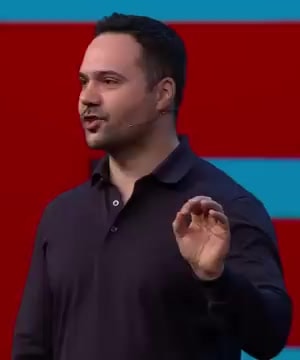
Aaron Bastani presents a compelling case for Universal Basic Services (UBS) as a transformative approach to address global challenges like inequality and climate change. He argues that UBS, unlike Universal Basic Income (UBI), offers a more feasible solution by providing essential services such as healthcare, housing, transport, and education, free at the point of use and funded through progressive taxation 1. Bastani envisions a society where these services are universally accessible, enabling true liberty and prosperity for all 2.
As a species, it's time we lived up to those glorious words, life, liberty and the pursuit of happiness, and recognize that for the majority of the global population, the pursuit of happiness is impossible. It's downright illusory. Unless they have access to universal basic services.
---
He emphasizes that this model is not utopian but a practical necessity for the 21st century.
Implementation Challenges
Implementing Universal Basic Services faces significant challenges, particularly in housing, due to entrenched economic models based on speculative investment 3. Bastani highlights the need for a shift similar to Japan's approach, where house prices remain stable to allow wages to catch up, thus making housing more accessible.
For the likes of the UK and the US, we need to have something akin to what Japan has seen over the last 25 years, which is effectively flat house price increases.
---
He argues that while the initial investment in UBS is substantial, the long-term benefits in terms of efficiency and inclusivity outweigh the costs.
Comparison with UBI
Bastani critiques Universal Basic Income (UBI) as an ineffective and costly alternative to Universal Basic Services 1. He believes that UBI fails to address the root causes of economic disparities and does little to transition economies away from fossil fuels. In contrast, UBS integrates a post-carbon agenda into essential services, promoting sustainability and economic planning 4.
With universal basic services, we can put a post carbon agenda at the heart of education, healthcare, transport and housing, rapidly decarbonising our economies.
---
This approach, he argues, is crucial for creating a sustainable future beyond capitalism.
Related Episodes

A Moral Blueprint for Reimagining Capitalism | Manish Bhardwaj | TED
Answers 383 questions

What Capitalism Gets Right – and Governments Get Wrong | Katherine Mangu-Ward | TED
Answers 383 questions
Dominic Price: What's your happiness score? | TED
Answers 383 questions
Jamil Zaki: How to escape the cynicism trap | TED
Answers 383 questions
The Eco-Creators Helping the Climate Through Social Media | Zahra Biabani | TED
Answers 383 questions

A New Social Contract for Global Climate Justice | Huma Yusuf | TED
Answers 383 questions
A Disability-Inclusive Future of Work | Ryan Gersava | TED
Answers 383 questions
How Everyday Interactions Shape Your Future | Mesmin Destin | TED
Answers 383 questions
A For-Profit Mindset for Nonprofit Success | Tolu Oyekan | TED
Answers 383 questions
Where on Earth Will People Live in the Future? | Parag Khanna | TED
Answers 383 questions
Does Working Hard Really Make You a Good Person? | Azim Shariff | TED
Answers 383 questionsR. Alan Brooks: When the world is burning, is art a waste of time? | TED
Answers 383 questions
How to Help Employees With Disabilities Thrive | The Way We Work, a TED series
Answers 383 questions