
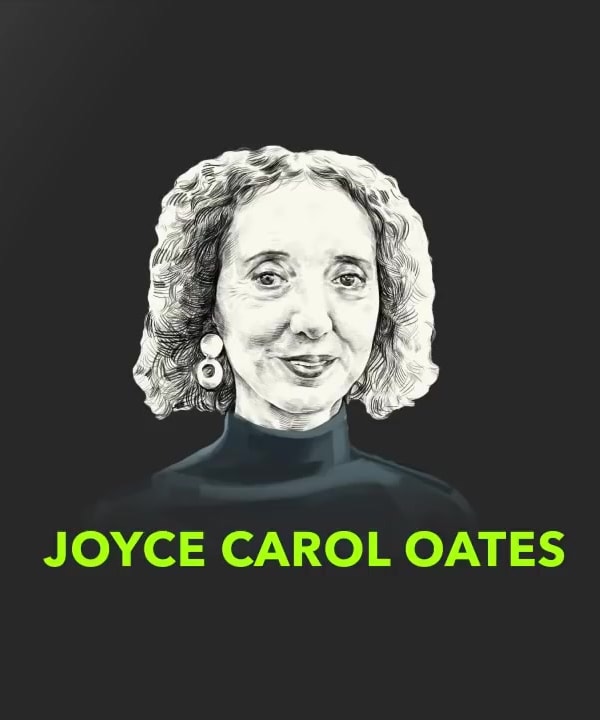
Joyce Carol Oates — A Writing Icon on Creative Process and Creative Living | The Tim Ferriss Show

Topics covered
Popular Clips


Questions from this episode
- Asked by 19 people
- Asked by 15 people
- Asked by 4 people
- Asked by 4 people
- Asked by 3 people
Episode Highlights
Revision Artistry
shares her intricate revision techniques, emphasizing the importance of adapting her approach based on the manuscript's style. She explains that whether working in a surreal or realistic mode, the unconscious mind plays a crucial role in her revisions, often expanding simple sentences into more complex narratives 1. Joyce finds revision to be an exciting process, likening it to an art form where the initial draft serves as raw material for further refinement 2.
The pull of the unconscious, I think, is very powerful, and the more we can let that fuel what we're doing, the more potent it is.
---
She believes that revision is a continuous process, often revisiting and refining her work multiple times to achieve the desired momentum and fluency.
Structured Creativity
Joyce discusses the necessity of having a clear beginning, end, and title before embarking on a writing project. She views the title as a unifying element that encapsulates the essence of the work, while the ending provides a destination to aim for 3. Joyce acknowledges that while she sometimes changes titles, having a structured outline helps guide her creative process.
I need a beginning and an end, and I need a title. The title is what brings it all together.
---
She emphasizes the importance of structure, noting that a well-defined framework allows for more effective exploration and creativity within the narrative.
Creative Energy
Joyce highlights the significance of maintaining creative energy and avoiding interruptions to sustain productivity. She believes that energy is a vital component of creativity, likening it to a flame that fuels the storytelling process 4. Joyce contrasts her lack of anxiety in writing with the pressures of performing arts, where real-time performance can be anxiety-inducing 5.
Energy is the most important writerly quality.
---
She stresses that writing allows for a more leisurely pace, enabling continuous revision and refinement without the immediate pressure of an audience.
Related Episodes


Margaret Atwood — A Living Legend on Creative Process, The Handmaid’s Tale, and More
Answers 383 questions
Michael Lewis on the Crafts of Writing, Friendship, and More | The Tim Ferriss Show
Answers 383 questions
Robert Rodriguez & Susan Cain — The Tim Ferriss Show
Answers 383 questions

Neil Gaiman and Debbie Millman - The Tim Ferriss Show
Answers 383 questionsKen Burns — A Master Filmmaker on Creative Process | The Tim Ferriss Show
Answers 383 questions
Neil Gaiman — The Interview I've Waited 20 Years To Do | The Tim Ferriss Show
Answers 383 questions
Blake Mycoskie — TOMS, Conscious Uncoupling, and Psychedelics | The Tim Ferriss Show
Answers 383 questions
Paulo Coelho Interview (Full Episode) | The Tim Ferriss Show (Podcast)
Answers 383 questions

Anne Lamott and Josh Waitzkin — The Tim Ferriss Show
Answers 383 questionsQ&A with Tim Ferriss — How to Live with Urgency
Answers 383 questions
Terry Crews Interview | The Tim Ferriss Show (Podcast)
Answers 383 questions


