Ryan Holiday — Turning the Tables | The Tim Ferriss Show

Topics covered
Popular Clips



Questions from this episode
- Asked by 118 people
- Asked by 106 people
- Asked by 40 people
- Asked by 39 people
- Asked by 37 people
- Asked by 29 people
- Asked by 23 people
- Asked by 21 people
- Asked by 19 people
- Asked by 9 people
Episode Highlights
Assessing Risks
emphasizes the importance of evaluating risks by comparing current and future options, focusing on both downside and upside potential. He highlights the need for a comprehensive risk assessment, considering factors like financial, reputational, and legal risks, to identify asymmetric bets where the downside is capped but the upside is significant 1. Ryan Holiday2. Ferriss shares his approach to demystifying intimidating ventures, like podcasting, by breaking them down into manageable parts:
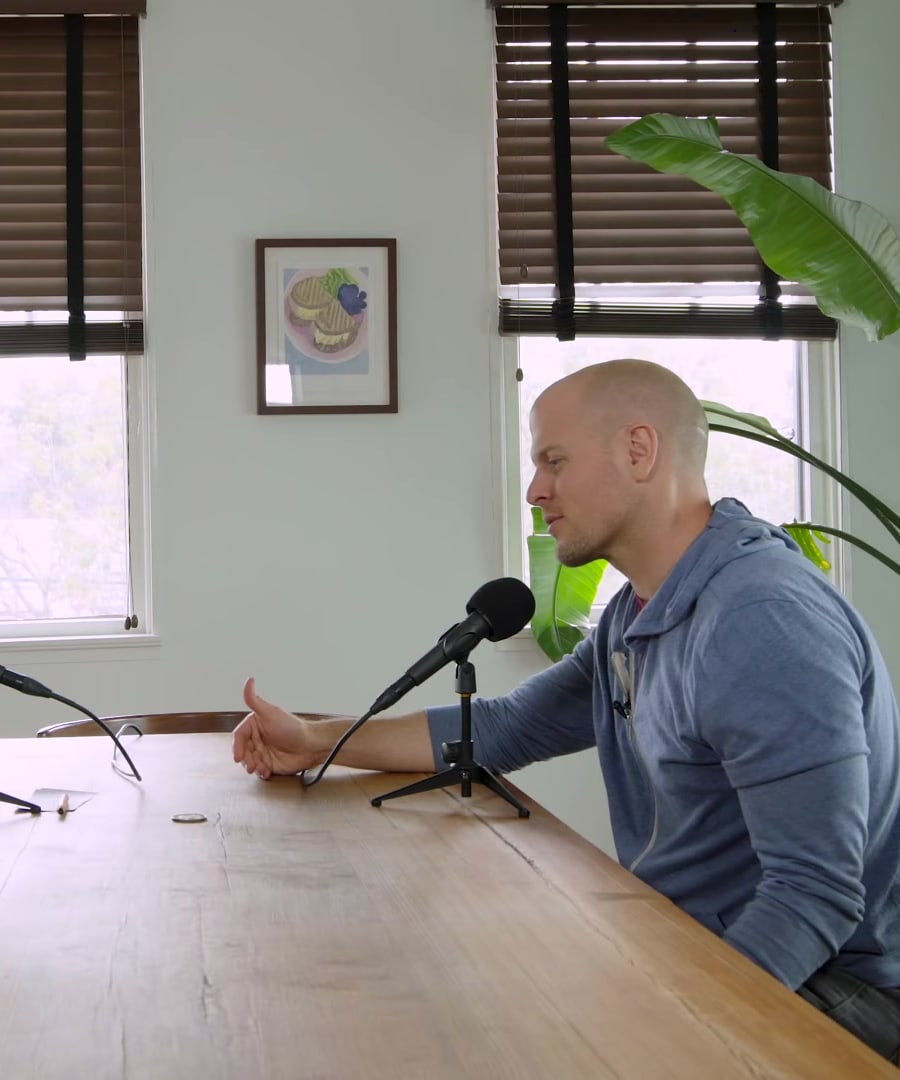
After doing six episodes, I'm not scared by audio at all because these mics, these cables, and the recorder that's on this chair, like, $500, and you're locked and loaded.
---
This mindset allows him to navigate risks wisely and make informed decisions.
Risk in Investments
In the realm of investing, applies risk management principles by focusing on informed and calculated risks. He stresses the importance of mathematical literacy and understanding concepts like expected value to make better investment decisions 3. Ferriss reflects on his investment journey, acknowledging the long timelines and uncertainties involved, which led him to question his commitment to full-time investing 4. He shares how his experiences in the Bay Area were largely driven by maintaining a competitive advantage in investing, but he realized that his professional need to be there diminished when he removed investing from the equation:
If you remove the investing, my professional need to be here is non-existent.
---
This realization highlights the importance of aligning personal and professional goals with risk management strategies.
Mitigating Downside
discusses his approach to mitigating downside risks by cultivating 'walk away power' and structuring his projects to limit potential losses. He emphasizes the importance of maintaining optionality and making decisions free from fear or guilt, which often lead to poor outcomes 5. Ferriss shares his practice of fear setting, a Stoic exercise that involves contemplating potential risks and outcomes to better prepare for them. adds that successful entrepreneurs like Richard Branson are experts in risk mitigation, focusing on survivable bets rather than high-stakes gambles 6. Ferriss explains:
I almost never burn the ships...most people should not sort of jump headfirst into the shallow end and hope that they figure it out.
---
This approach underscores the value of strategic planning and risk management in achieving favorable outcomes.
Related Episodes


Ryan Holiday Returns (Full Episode) | The Tim Ferriss Show (Podcast)
Answers 383 questions
Tony Robbins Returns (Full Episode) | The Tim Ferriss Show (Podcast)
Answers 383 questions

Lessons and Warnings From Successful Risk Takers | The Tim Ferriss Show (Podcast)
Answers 383 questions
Tim Urban | The Tim Ferriss Show (Podcast)
Answers 383 questionsCanvas Strategy with Ryan Holiday (Full Episode) | The Tim Ferriss Show (Podcast)
Answers 383 questions

Lessons Learned Traveling The World | The Tim Ferriss Show (Podcast)
Answers 383 questions
Rich Roll — Reinventing Your Life at 30, 40, and Beyond | The Tim Ferriss Show
Answers 383 questions

Michael Lewis and Martine Rothblatt - The Tim Ferriss Show
Answers 383 questions
How to Be Tim Ferriss | The Tim Ferriss Show (Podcast)
Answers 383 questions