
AI-Powered Conversational Interfaces with Paul Tepper - #52

Topics covered
Popular Clips






Episode Highlights
Innovation
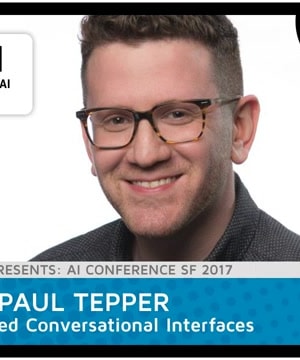
Paul Tepper, worldwide head of cognitive innovation at Nuance Communications, shares insights into the company's strategic directions in AI development. He emphasizes the importance of identifying high-value problems and collaborating with the corporate research division to prototype solutions. This approach aims to move innovation forward and provide new opportunities for product management teams across the company 1. Paul also highlights his background in computational linguistics and his experience in building cloud-based NLP platforms, which informs his current work at Nuance 2.
I lead a team that has a few functions. One of our main functions is identifying high value problems for which the company doesn't yet have a solution.
---
His focus on dialogue and nonverbal behavior in computational linguistics plays a crucial role in shaping Nuance's AI initiatives.
Privacy Challenges
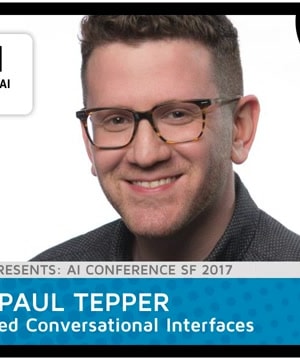
Data privacy is a significant challenge for AI companies like Nuance, as Paul Tepper explains. Balancing competitive AI development with customer data protection involves navigating complex legal issues, especially for clients like banks and government agencies 3. Paul notes that explicit consent is often required to use data, even for model tuning, highlighting the legal intricacies involved.
It's not how do I scale a deep learning model, or how do I productionize this system... It's like the legal problems.
---
Additionally, the customization of user interactions through machine learning models is complicated by privacy concerns, as many clients prefer not to share data or models, even for optimizing chatbot interactions 4.
Related Episodes


Hyper-Personalizing the Customer Experience with AI, w/ Rob Walker - #127
Answers 383 questions
Building Conversational Interfaces for Financial Services with Kenneth Conroy - #61
Answers 383 questionsAI for Enterprise Decisioning at Scale with Rob Walker - #573
Answers 383 questions
AI-Powered Peer Programming with Vasi Philomin - #594
Answers 383 questions
AI Innovation for Clinical Decision Support with Joe Connor - TWiML Talk #169
Answers 383 questions
Building AI Voice Agents with Scott Stephenson - 707
Answers 383 questions
AI for Healthcare with Peter Lee - TWiML Talk #231
Answers 383 questions
Omni-Channel Customer Experiences with Vince Jeffs - #154
Answers 383 questions
Emotional AI: Teaching Computers Empathy with Pascale Fung - #9
Answers 383 questions
Engineering the Future of AI with Ruchir Puri - #21
Answers 383 questions
Global AI Trends with Ben Lorica - #26
Answers 383 questionsEmpathy in AI with Rob Walker - TWiML Talk #248
Answers 383 questions
AI Storytelling Systems with Mark Riedl - #478
Answers 383 questions
Automating Complex Internal Processes with AI, w/ Alexander Chukovski - #161
Answers 383 questions
Automated Machine Learning with Erez Barak - #323
Answers 383 questions